
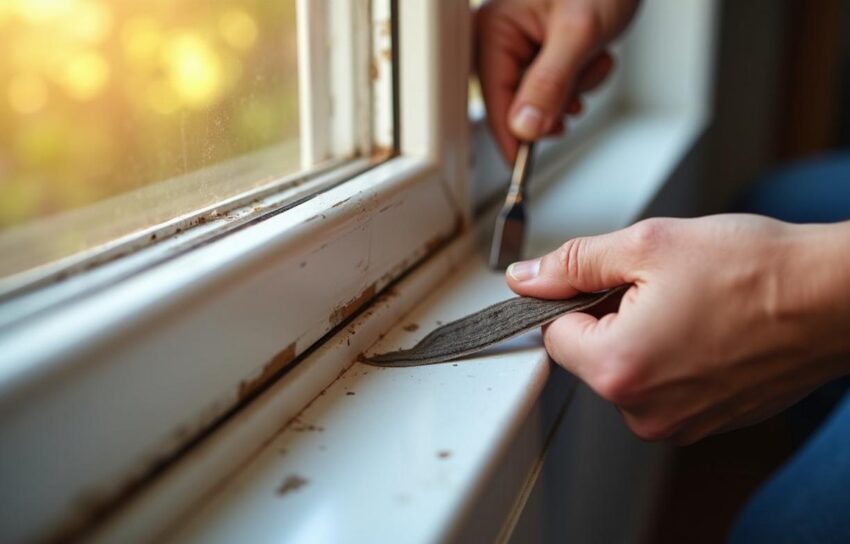
Older windows often leak air long before the glass or sash fails. The usual gaps appear where the sash meets the jamb, where the meeting rails touch, and where a lower sash sits on the sill. A gap as small as 1/16 inch can create a noticeable draft on a windy day.
The U.S. Department of Energy says air sealing can reduce heating and cooling energy use, especially when leaks occur around windows, doors, attics, and basements. For many older homes, weatherstripping replacement is the first repair to try before paying for new windows.
How to Confirm the Window Is Actually Leaking
Start with a visual check on a dry, windy day. Look for daylight around the sash, loose paint lines, cracked putty, missing parting beads, or a sash that no longer sits square in the frame. If the gap is wider than 1/8 inch, weatherstripping alone may not close it cleanly.
Use an incense stick, smoke pencil, or a thin tissue to trace the sash edges. Hold it about 1 inch from the frame and watch for steady movement. Test the lock side, meeting rail, top sash, bottom sash, and pulley pockets if the window has sash weights.
Drafts Versus Cold Glass
Cold glass can feel like a draft even when air is not moving. Single-pane glass often creates a chilled downdraft as room air touches the cold surface and falls. The National Fenestration Rating Council, which rates window performance, rates air leakage and U-factor separately because they measure different problems.
If smoke stays still but the room feels cold near the window, add a storm window or interior insulating panel instead. If smoke pulls sharply through the joint, seal the sash and frame. If both happen, address the air leak first, then improve the glass layer.
Pick the Right Material for the Window Type
Older wood windows need materials that compress, slide, or flex without blocking sash movement. Avoid thick foam where the sash must glide in a narrow channel. A typical double-hung wood window may have only 1/8 inch of clearance in the side jamb.
V-strip, spring bronze, silicone bulb, and adhesive foam all solve different gaps. The best choice depends on the window’s movement, paint buildup, gap size, and whether you want a reversible repair.
| Situation | Best fit | Gap range | Where it goes |
|---|---|---|---|
| Double-hung wood sash that still slides | Spring bronze | 1/16 to 1/8 inch | Side jambs and meeting rail |
| Slightly uneven sash or painted frame | Silicone bulb | 1/8 to 1/4 inch | Stops, sill, or top rail |
| Temporary seasonal fix | Closed-cell adhesive foam | 1/16 to 3/16 inch | Non-sliding contact points |
| Casement window with latch pressure | Compression bulb | 1/8 to 5/16 inch | Frame stop |
| Loose meeting rails | V-strip | 1/16 to 1/4 inch | Between upper and lower sash |
Best Choice for Wood Double-Hung Windows
Spring bronze is a strong match for old double-hung windows. It nails into the jamb and flexes against the moving sash. It also tolerates paint, slight waviness, and repeated use better than stick-on foam.
Cut the strip about 1/2 inch shorter than the jamb height. Place nails every 3 to 4 inches, then flare the bronze slightly with a putty knife. Keep the raised edge facing the sash so it presses gently when the window closes.
Best Choice for Quick Seasonal Sealing
Closed-cell adhesive foam works when you need a fast fix before winter. Choose foam slightly thicker than the measured gap, not twice as thick. Over-compression can stop the lock from engaging or bend an older sash.
Clean the surface with mild detergent, then wipe it dry before applying. Install foam when the surface temperature is above 50°F, unless the label allows colder application. Replace it when it loses spring or starts tearing, often after one heating season.
When Repair Beats Replacing the Window
Repair makes sense when the sash is solid, the rails are not rotten, and the frame is still square. Press a screwdriver into the lower rail and sill; soft wood deeper than 1/4 inch needs carpentry before sealing. A loose sash lock can also mimic an air leak because it fails to pull the meeting rails tight.
The Environmental Protection Agency’s ENERGY STAR program notes that efficient windows help comfort and energy performance. Still, a sound older window with good weatherstripping and a tight storm window can perform well. This is especially true in historic homes where original wood is dense and repairable.
Which Option Fits Which Situation
Choose a simple seal if the sash moves smoothly and the draft comes from a narrow, even gap. Choose spring bronze if the window gets regular use and you want a long-life repair. Choose a storm window or interior panel if smoke testing shows little leakage but the glass feels cold.
Choose sash repair when cords are broken, locks miss their keeper, or the sash drops on its own. Choose full window replacement when rot affects the frame corners, the sash is badly twisted, or glass seals have failed in insulated units. A professional sash tune-up commonly lands in the $150 to $350 per window range when cords, locks, and sealing all need work.
Installation Details That Matter
Measure the gap before buying material. Use a stack of feeler gauges, coins, or cardboard strips to estimate the opening with the sash closed. A U.S. quarter is about 0.069 inch thick, which helps approximate a 1/16-inch gap.
Remove loose paint ridges before installing any seal. Thick paint can make the sash bind and can tear adhesive strips. If the home was built before 1978, follow EPA lead-safe work practices before sanding, scraping, or disturbing old paint.
Common Failure Points
The meeting rail is often the worst leak on double-hung windows. If the lock does not pull the rails together, replace or reposition the keeper before adding thick weatherstrip. A 1/8-inch keeper shift can change how tightly the sash closes.
Pulley pockets also leak when old sash-weight cavities connect to cold wall spaces. Fit a small removable cover over each pocket, or use a specialized pulley seal. Do not foam the weight pocket shut if the original sash weights still operate.
A Step-by-Step Plan for One Drafty Window
Begin by washing the contact surfaces and letting them dry for at least 30 minutes. Lock the sash and smoke-test all four sides. Mark leaking spots with painter’s tape instead of guessing later.
Next, measure the largest and smallest gaps. If the difference exceeds 1/8 inch along one side, adjust the sash or stops first. Weatherstripping works best when the window closes in a predictable plane.
Install the side seals first, then the top or bottom contact points, then the meeting rail. Open and close the sash ten times after each area. If the sash drags, trim the seal or reduce pressure before adding more material.
Finish by testing the lock. A properly sealed double-hung window should close without forcing the latch. Forcing the latch can crack old glass, loosen joinery, or strip small brass screws.
Maintenance After the First Winter
Inspect the seal after the first freeze-thaw cycle. Wood moves as indoor humidity drops, and a gap that closed in October may reopen in January. Indoor relative humidity often falls below 35% in heated homes, which can shrink old sash rails slightly.
Lubricate spring bronze with a light wipe of paste wax if the sash rubs. Do not oil it, because oil attracts grit and darkens unfinished wood. Replace adhesive foam when it stays flattened after the window opens.
Check caulk separately from movable weatherstrips. Caulk belongs on fixed exterior joints, such as trim-to-siding seams, not between parts that must move. If caulk traps a sash shut, spring repairs and glass maintenance become harder.