
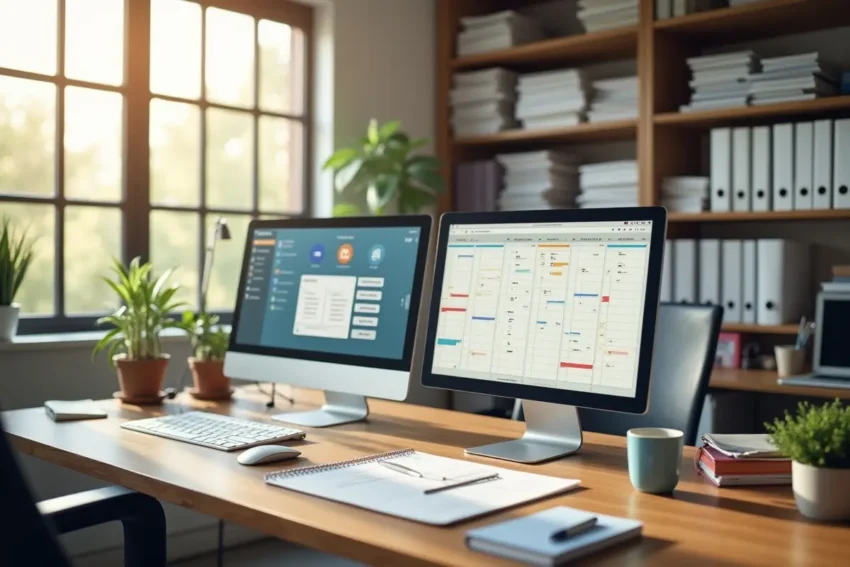
Admin-heavy workspaces can become cluttered quickly. Paperwork, shared supplies, archived records, and everyday desk items all compete for limited space, making the room feel harder to manage. In most cases, a tidier setup comes from practical systems rather than major changes, especially when the space needs to support filing, checking, storing, and processing information throughout the day.
Separate Daily Use From Archived Material
One of the most effective ways to tidy an admin-heavy workspace is to separate what is used daily from what only needs to be kept on file. Many offices store active paperwork too close to old records, which fills desks and cabinets with material that is rarely touched. That overlap creates clutter and makes routine tasks slower.
Storage works best when it supports that distinction. Keeping active files within reach while moving older records into clearly labelled, categorised storage can reduce visual mess without disrupting workflow. In many cases, a used two drawer file cabinet and office storage options can help create that divide by giving retained paperwork a proper place away from the main work surface.
Give Every Paper Stream A Fixed Home
Admin spaces often become untidy because paper enters the room faster than it leaves. Invoices, forms awaiting approval, delivery notes, and internal records can easily end up in temporary piles when there is no clear place for each type of document. Once that happens, staff tend to create their own workarounds, which only adds to the confusion.
A more practical solution is to assign a fixed location to each paper stream and keep that structure consistent. This improves document flow, meaning paperwork moves through the workspace in a predictable way. When each category has a clear destination, staff spend less time sorting, shifting, and searching through loose stacks.
Label Storage For Faster Retrieval
Storage does not improve tidiness unless people can use it quickly. A cupboard or drawer full of mixed paperwork may hide clutter, but it does not solve it. Hidden disorder often leads to repeated searching, duplicated printing, or wasted supplies because no one is fully sure where things belong.
Clear labels turn storage into a working system. Simple categories based on function, department, or date range create a more reliable retrieval system. In admin-heavy settings, tidiness is not just about appearance. It also depends on how quickly staff can find what they need without disrupting the rest of the room.
Reduce What Stays On The Desk
In admin-led environments, desks often become overflow zones for stationery, folders, manuals, receipts, and chargers. The issue is not always the amount of material in the room, but how much of it remains on the main work surface. Once a desk starts acting as general storage, routine tasks become harder to complete.
A tidier setup usually depends on being stricter about what deserves desk space. Only the items needed for the current day should stay within reach, while everything else should move into nearby drawers, shelves, or labelled compartments. That kind of setup also reflects 5S principles, which prioritise order, cleanliness, and consistency in the workspace.
Build In Small Reset Points
Many workplaces treat tidying as something to do at the end of the week, but admin spaces need lighter and more regular resets. Because paperwork and supplies move constantly, even a well-organised room can become messy by midday. Leaving that build-up too long usually makes it harder to correct.
Short reset points are more effective because they stop clutter from accumulating. A few minutes spent returning files, clearing completed paperwork, and putting shared tools back where they belong can prevent disorder from becoming routine. This supports workflow continuity, as staff are not forced to clear space before they can start the next task.
Make Tidiness Easier To Maintain
The most effective admin-heavy workspaces are not always the sparsest. They are usually the easiest to maintain because the layout reflects the work being done. Storage sits where it is needed, paperwork moves logically, and staff do not need to invent new systems just to stay organised.
When tidiness is built around daily admin routines, the space becomes easier to manage and easier to trust. That helps protect usable space, reduce friction, and support more efficient work across the day.