
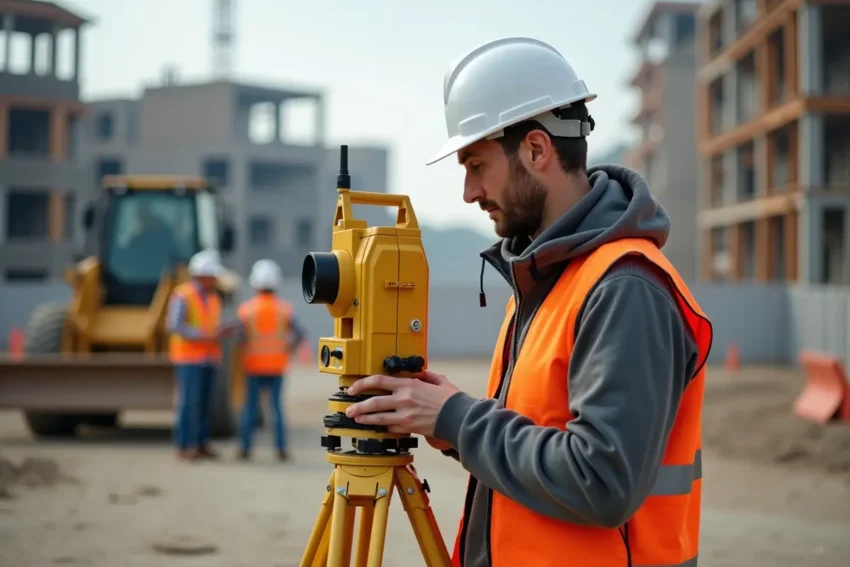
Surveying is a critical component of the construction industry, shaping the success of every project from the earliest planning stages to final inspections. Accurate measurement and data collection are the foundation for safe, efficient, and compliant construction. Professionals, including reputable industrial engineering firm, rely on skilled surveyors to provide high-quality information for strategic decision-making and effective project management.
With the increasing complexity of construction projects, the need for precise surveying has never been more crucial. Errors in the surveying process can lead to costly delays, rework, and even legal issues, underscoring the surveyor’s indispensable role. This article delves into the primary functions that surveying serves across various phases of construction management and inspection.
Pre-Construction Surveying
Before any construction activity begins, a series of comprehensive surveys is conducted to assess the site’s condition and suitability. The major types of pre-construction surveys include:
- Land Surveys: Determining property lines and legal boundaries to prevent disputes and encroachments.
- Topographical Surveys: Mapping out natural features such as slopes, elevations, and man-made developments to assist with design work.
- Geotechnical Surveys: Investigating soil composition, load-bearing capacity, and groundwater levels to ensure safe foundations and structures.
- Environmental Surveys: Identifying ecological or health-related constraints, such as wetlands or contaminated land.
- Utility Surveys: Pinpointing the location of existing underground infrastructure to avoid costly or hazardous construction conflicts.
Collectively, these surveys help project teams make informed decisions, minimizing surprises and supporting thorough project planning from the outset.
Accurate Site Analysis and Planning
After pre-construction surveys are complete, surveyors turn their focus toward detailed site analysis. By mapping land features, identifying boundaries, and locating existing infrastructure, they equip project managers and engineers with the insights required to develop optimized site layouts. This process helps determine the most suitable placement for buildings, roadways, and utilities, while also exposing potential constraints that could affect timelines or budgets.
Accurate site data at this stage is critical to preventing design errors and minimizing downstream costs. Project teams can proactively address potential issues, such as drainage needs, topography changes, or limited access points, before construction activities begin.
Furthermore, integrating survey data into digital construction models, such as Building Information Modeling (BIM), has become increasingly popular for streamlining project planning. This integration fosters seamless collaboration among architects, engineers, and contractors, enabling them to visualize proposed structures in the context of real-world site conditions. The accuracy of surveyors’ data underpins the reliability of these digital models, reducing miscommunication and misalignment during planning.
Precise Measurement and Layout
Throughout active construction, surveyors maintain an authoritative presence on the job site. Their responsibility is to establish and maintain reference points, known as benchmarks, and control networks that guide the positioning of every element. Using advanced tools such as total stations, GPS, and laser-based technologies, surveyors ensure that structures, foundations, and utilities adhere strictly to engineered designs.
This level of precision eliminates costly misalignments and structural errors, supporting long-term durability and compliance. Even minor discrepancies in initial measurements can magnify into significant problems as the project progresses, making vigilant surveying indispensable during construction layout.
In addition to traditional measurement tasks, modern surveyors are increasingly involved in coordinating and overseeing the use of drones for aerial mapping and photogrammetry. These technologies expand the scope of surveying, enabling quick assessments of large or challenging sites and providing real-time visual data to project stakeholders. Continuous technological advancements enable surveyors to work more efficiently while improving accuracy and comprehensiveness in their measurements.
Construction Control and Quality Assurance
Surveyors also play a central role in project oversight by continuously monitoring progress and verifying construction quality. They check that assets are being built as planned, within specified tolerances, and in accordance with regulatory requirements. Their data and measurements underpin regular inspections and milestone reviews throughout the build process.
Timely identification of deviations or quality shortfalls enables immediate corrective action, preventing costly rework or safety compromises in later project phases. This approach upholds client expectations for quality and ensures compliance with codes and standards that are routinely updated and enforced in the construction sector.
Documented survey reports also serve as critical communication tools among contractors, owners, and regulatory bodies. These deliverables provide an objective basis for resolving disputes, verifying contractual performance, and demonstrating compliance during audits or inspections. Reliable quality assurance assures stakeholders that their investment is protected throughout the entire construction process.
Monitoring and Mitigating Risks
As projects become more complex, modern surveying increasingly includes real-time monitoring techniques such as geodetic monitoring and 3D laser scanning. These methods let surveyors track structural stability, detect soil settlement, and monitor movement of the project site during and after construction. Such surveillance is especially vital for large-scale infrastructure projects and those in geologically sensitive areas.
Detecting potential issues early is essential in mitigating risk. Whether adjusting for minor shifts in building foundations or identifying hazardous settlement patterns, timely intervention can prevent catastrophic failures and enhance overall site safety.
Survey data can also support comprehensive risk management strategies by informing safety protocols and emergency response plans. When surveyors identify high-risk zones or evolving site conditions, project managers are empowered to implement tailored mitigation and monitoring strategies, thereby reducing exposure to unforeseen hazards and improving resilience.
As-Built Documentation and Asset Management
Upon completion, surveyors compile “as-built” documentation that records the actual physical layout, dimensions, and conditions of the finished project, including any deviations from original plans. These documents are invaluable references for property managers, facility operators, and maintenance crews, enabling effective long-term management and facilitating future expansions or renovations.
Furthermore, accurate as-built data reduces uncertainty and risk in real estate transactions and regulatory reviews, providing a comprehensive baseline for subsequent site modifications.
As-built records are also frequently integrated into Geographic Information Systems (GIS) and digital twin platforms, ensuring that asset data remains current and accessible for asset lifecycle management. This facilitates proactive maintenance, regulatory compliance, and supports smart infrastructure initiatives that rely on accurate, real-time data for operational efficiency and sustainability.
Final Thoughts
Surveying serves as the backbone of robust construction management and inspection. By providing accurate and actionable data at every stage, from initial site assessment through to project turnover, surveyors support informed decision-making, maintain quality, and safeguard project outcomes. Their contributions not only ensure the project’s success today but also provide data you can build on for future renovations, expansions, or asset management needs.
It is clear that the impact of skilled surveying extends far beyond simple measurements. Surveyors bring together technology, industry knowledge, and analytical skills to drive efficiency, safety, and innovation in construction. The future of construction management will increasingly rely on the evolving role of surveyors, whose work continues to set the standard for excellence across the built environment.