
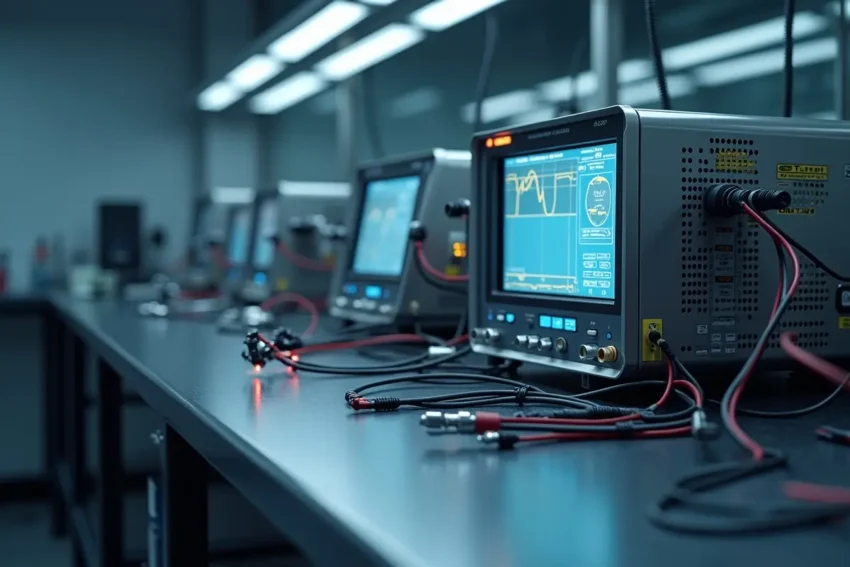
Safeguarding people, property, and assets through rigorous electrical safety practices is more vital than ever in our technology-focused era. Comprehensive standards and continual improvement in testing protocols help reduce risks, prevent electrical incidents, and ensure the long-term reliability of electrical systems. One of the pillars of modern safety assurance is the use of ASTM-compliant dielectric testing for electrical safety equipment, which verifies that protective gear and systems perform reliably under high-voltage conditions.
As organizations adopt new technologies and advanced equipment, the importance of thorough safety evaluations grows. Dielectric testing plays a crucial role in verifying insulation integrity and the resilience of systems against electrical failures. This emphasis on safety is evident in regulations and the expectations of customers, insurers, and employees worldwide.
With the expansion of electrical networks and the use of sensitive electronics, electrical hazards have become more complex. Regulatory agencies have updated standards to keep pace with technological advancements, posing new challenges for safety professionals. Today, staying current with and implementing the latest dielectric testing techniques is critical.
Electrical infrastructure in commercial, residential, and industrial sectors relies on clear maintenance and inspection protocols. Employing standardized, advanced testing methods ensures compliance, operational reliability, and safety, thereby reducing the risk of accidents, property damage, and costly downtime.
Evolution of Electrical Safety Standards
Electrical safety standards have continually evolved to address both legacy and emerging risks. The progression of standards demonstrates an increasing emphasis on what constitutes safe design, installation, and maintenance. A prominent example is the National Fire Protection Association’s shift of NFPA 70B from a guideline to an enforceable standard in 2023. This change requires the mandatory development and implementation of Electrical Maintenance Programs (EMPs) across a wide range of facilities.
The requirement for proactive, systematic maintenance rather than simple compliance has raised the baseline for safety and reliability in critical electrical installations. The importance of these programs is underscored by new provisions that specify recordkeeping, methods, testing intervals, and communication among stakeholders.
The International Electrotechnical Commission (IEC) and Occupational Safety and Health Administration (OSHA) have also updated technical requirements and recognized testing methods to address increased voltages and changing workplace hazards. The convergence of multiple standards, including those from the Institute of Electrical and Electronics Engineers (IEEE) and Underwriters Laboratories (UL), has further sharpened focus on the conditions, sequence, and interpretation of electrical tests, such as dielectric strength and insulation integrity.
Modern Dielectric Testing Methods
As the expectations for safety increase, so does the sophistication of dielectric testing. Modern methods are designed not only to ensure compliance but also to catch early signs of insulation degradation that might otherwise go undetected. The cornerstone tests include:
- Dielectric Voltage Withstand Test: Also known as the hipot (high potential) test, this test exposes the equipment to voltages exceeding its rated operating levels for a set period to demonstrate that the insulation will not break down under normal or abnormal conditions. The results establish whether products are safe to enter service.
- Insulation Resistance Test: This procedure quantifies electrical resistance in insulation under controlled voltage. High resistance values confirm that leakage currents are within safe limits, while low resistance values can indicate moisture ingress, contamination, or physical damage.
- Earth Continuity Test: Ensuring the protective earth path is intact and fully functional is critical, especially for portable equipment and fixed installations. This test confirms there are no unintentional breaks or high-resistance joints in the earth connection.
Recent Advancements in Dielectric Testing
Ongoing innovation is making dielectric testing more robust and less intrusive, enabling more frequent testing without interrupting regular operations. In early 2024, IEEE introduced the IEEE 400.2-2024 standard, which standardizes Very Low Frequency (VLF) testing at field sites to assess shielded medium-voltage cable systems.
This testing protocol improves fault detection and more accurately predicts insulation failures, which can preempt catastrophic events and unscheduled outages. By leveraging digital controls, remote data collection, and strict procedural consistency, utilities and manufacturers can achieve predictive maintenance while filling key gaps in traditional periodic testing.
Another notable advancement is the integration of automated controls and real-time monitoring into testing devices. Modern dielectric testers can self-calibrate, adapt to environmental changes, and alert operators to anomalous results immediately. Enhanced reporting tools enable test data to be captured and analyzed more quickly, accelerating response times and supporting regulatory compliance. These technologies also minimize operator exposure to high-voltage risks by automating critical steps, aligning with recommendations from international safety organizations like the National Institute for Occupational Safety and Health (NIOSH).
Best Practices for Dielectric Testing
Consistent adherence to a set of field-proven best practices ensures not only compliance but also the safety of technicians and the long-term performance of electrical equipment.
- Understand and Comply with Relevant Standards: Ensure all technicians and supervisors are fully trained on applicable standards, including NFPA 70B, OSHA regulations, and IEC requirements, before performing any dielectric or insulation testing.
- Develop a Comprehensive Safety Plan: Every testing session should begin with a detailed safety assessment. This includes verifying proper lockout/tagout procedures, ensuring the area is clear of unauthorized personnel, and confirming that all test participants are using suitable personal protective equipment (PPE).
- Regular Equipment Calibration: All test instruments must be calibrated according to the manufacturer’s recommended schedules. Calibration certificates should be current and accessible. Uncalibrated tools can yield inaccurate results, putting both operators and infrastructure at risk.
- Monitor Environmental Conditions: Dielectric properties can be sensitive to temperature and humidity. Accurately record ambient conditions and apply any necessary corrections to the results to maintain validity.
- Document and Analyze Test Results: Maintaining thorough records of each test, including the conditions, sequence, settings, and outcomes, enables the detection of trends before failure and satisfies the record-keeping requirements embedded in recent safety standards.
Conclusion
Modern electrical safety is built on rigorous standards, advanced testing technology, and strict best practices. Prioritizing regular dielectric and insulation testing for all electrical safety equipment ensures compliance, maintains operational resilience, and prevents accidents.
As electrical systems and components evolve, adopting new standards and leveraging innovative testing methods protects people and property while supporting continuous improvement in safety culture. Staying current with changing standards and technological advancements is not just regulatory compliance; it is a critical part of risk management in every electrical environment.