
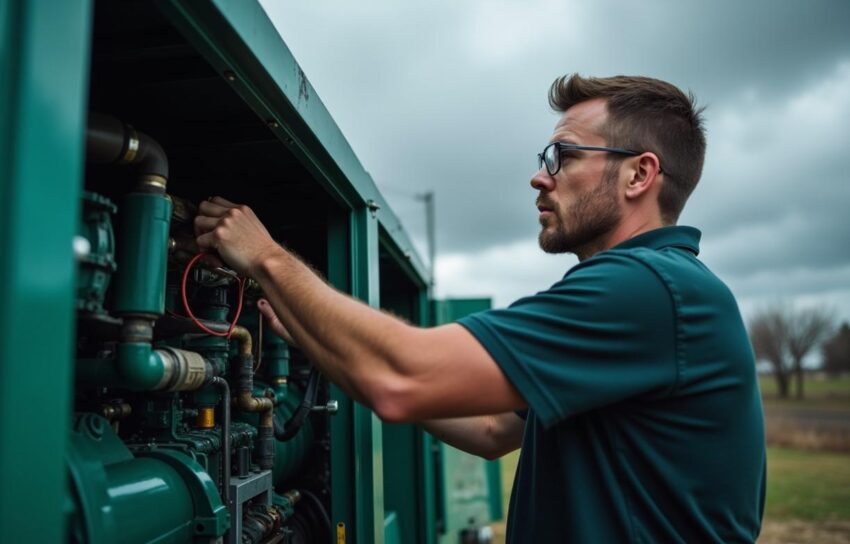
Storm outages punish generators that have been sitting idle. Fuel ages, batteries weaken, air intakes clog, and small leaks become shutdowns under load. A five-minute start is not enough preparation when wind and flood warnings are already posted.
The safest time to service a unit is before watches appear on the forecast. NOAA’s National Weather Service often issues tropical storm watches about 48 hours before expected conditions, leaving little room for parts, fuel delivery, or an electrician visit. A simple generator maintenance plan should start days or weeks earlier.
Start With a Pre-Storm Inspection
Walk around the generator with the power off and the engine cool. Look for oil stains, loose wires, cracked hoses, rodent nests, blocked vents, and rust around the enclosure. Clear leaves and grass from all sides so cooling air can move freely. Many portable and standby units need at least 3 feet of clearance, though the manufacturer’s manual controls the exact distance.
Check the data plate before connecting new loads. The running watts and starting watts matter during outages because motors draw a surge when they start. A refrigerator may run at 700 watts but need 2,000 watts for startup. Well pumps, sump pumps, and air conditioners create larger surges.
Check Fluids, Filters, and Belts
Check engine oil with the unit level. Low oil sensors can stop the engine during the first hard load. If the oil looks milky, water may have entered the crankcase. If it smells like fuel, the carburetor or injectors may need service.
Inspect the air filter and replace it if it looks dark, oily, torn, or packed with dust. A clogged filter makes the engine run rich and foul plugs. Check coolant on liquid-cooled standby units only when the engine is cold. Look for belt cracks, glazing, or more than about 1/2 inch of deflection on small belt spans.
Fuel Readiness Matters More Than Starting Once
Bad fuel is a common reason generators fail during storm outages. Gasoline can start degrading in 30 days, especially in heat. Diesel can grow microbes when water settles in the tank. Propane stores far longer, but regulators and lines still need inspection.
FEMA advises keeping emergency supplies ready before a disaster, including power and fuel planning. Store fuel in approved containers, away from ignition sources, and outside living spaces. Do not fill portable generator tanks while the engine is hot. Spilled fuel can ignite on hot exhaust parts.
Gasoline, Diesel, and Propane Checks
For gasoline units, use fresh fuel and stabilizer if storage will exceed one month. Run the engine long enough for treated fuel to reach the carburetor. Drain stale gasoline if it smells sour or varnish-like. Carburetor jets clog quickly when untreated fuel evaporates.
For diesel units, drain water separators and inspect the tank for contamination. Cloudy fuel, slime, or dark strings can indicate microbial growth. For propane units, check tank level and look for cracked hoses or corrosion on fittings. Apply leak-detection solution to fittings; bubbles mean the gas must stay off until repaired.
Exercise the Generator Under Real Load
A generator that starts without load has not proven much. Run it under a meaningful load so the alternator, voltage regulator, cooling system, and fuel delivery all work together. NFPA 110, the standard for emergency and standby power systems, requires routine testing for many installed emergency power systems. Home systems should follow the same logic, even when the code does not apply.
Let the generator warm up for several minutes before adding loads. Then add circuits gradually. Listen for hunting, surging, knocking, or stumbling. Watch for exhaust smoke, warning lights, and abnormal vibration.
What a Useful Test Looks Like
Run portable units for at least 20 to 30 minutes under load. Standby generators often run a weekly automatic exercise cycle, but that may be unloaded. If possible, test critical circuits through the transfer switch before storm season. This confirms the refrigerator, sump pump, furnace blower, and selected outlets energize correctly.
Use a plug-in voltage meter or the generator display. Most household loads expect about 120 volts on standard outlets. Voltage that stays below 108 volts or above 132 volts can damage appliances. Frequency should stay near 60 Hz; many meters show hertz directly.
Battery and Starting System Checks
Standby units depend on a small starting battery. A weak battery may spin the engine on a warm day but fail during heavy rain and repeated starts. Check for corrosion, swollen cases, loose terminals, and date codes. Many lead-acid starting batteries become suspect after 3 to 5 years.
Measure resting voltage with a digital meter. A fully charged 12-volt battery should read about 12.6 volts. Readings near 12.2 volts show roughly half charge. If voltage drops below 10 volts during cranking, the battery or cables need attention.
Choose the Right Prep Based on Your Situation
Different homes need different preparation. A portable unit for a refrigerator and phone chargers needs less work than a whole-house standby unit tied to a transfer switch. The wrong choice can create carbon monoxide hazards, overloads, or backfeed into utility lines.
The Consumer Product Safety Commission warns that portable generators can produce deadly carbon monoxide within minutes. Run them outdoors only, never in a garage, porch, basement, or near open windows. Keep the exhaust pointed away from doors and vents. Use carbon monoxide alarms on every level of the home.
| Situation | Best preparation | Clear conditions |
|---|---|---|
| Portable generator, extension cords only | Test cords, fuel, oil, and loads | Works for refrigerators, chargers, lights, and small appliances |
| Portable generator with manual transfer switch | Test switch positions and labeled circuits | Fits homes that need furnace blower, well pump, or sump pump |
| Standby generator | Schedule service and load test | Fits frequent outages, medical equipment, or automatic startup needs |
| Older unit with hard starting | Repair before storm season | Needed if surging, smoke, fuel leaks, or repeated shutdowns appear |
A manual transfer switch is often the safest upgrade for portable power. It prevents backfeed and avoids running cords through wet doorways. Installed transfer equipment should meet local electrical code and utility rules. A typical professionally installed manual transfer switch often lands between $800 and $2,500, depending on circuit count and panel location.
Safety Checks Before the First Outage
Place portable generators on dry, level ground outdoors. Keep them at least 20 feet from doors, windows, and vents when possible. The exhaust must face away from occupied spaces. Never operate a generator inside a garage, even with the door open.
Use outdoor-rated cords sized for the load. A 12-gauge cord handles more current than a 16-gauge cord over the same distance. Long, thin cords cause voltage drop and heat buildup. Replace cords with cracked jackets, loose plugs, or burn marks.
Transfer Switch and Backfeed Risks
Never power a house by plugging a generator into a wall outlet. This creates backfeed that can energize utility lines and injure line workers. It can also destroy the generator when grid power returns. Only listed transfer equipment should connect a generator to household wiring.
Label the circuits that the generator can support. Put high-startup loads on separate steps in your startup routine. Start the generator first, let it stabilize, and then add the largest motor load. Add smaller loads after the engine speed steadies.
Keep a Storm-Ready Service Schedule
Build the schedule around hours and calendar time. Check oil before every extended run. Clean debris from the enclosure monthly during storm season. Run a load test before peak outage months, not after the first warning.
Change oil according to the manual, often after the first 20 to 30 hours on new portable units. After break-in, many small engines call for oil changes every 50 to 100 hours. Replace spark plugs if the electrode is worn, fouled, or the gap no longer matches the manual. Keep one spare oil filter, air filter, spark plug, and quart of the correct oil on hand.
Log each run with date, hours, load, fuel added, and any fault codes. This record helps spot patterns before failure. If the generator shuts down under load, leaks fuel, trips breakers repeatedly, or shows unstable voltage, stop using it until a qualified technician inspects it. Storm service appointments can fill several weeks ahead of hurricane season.