
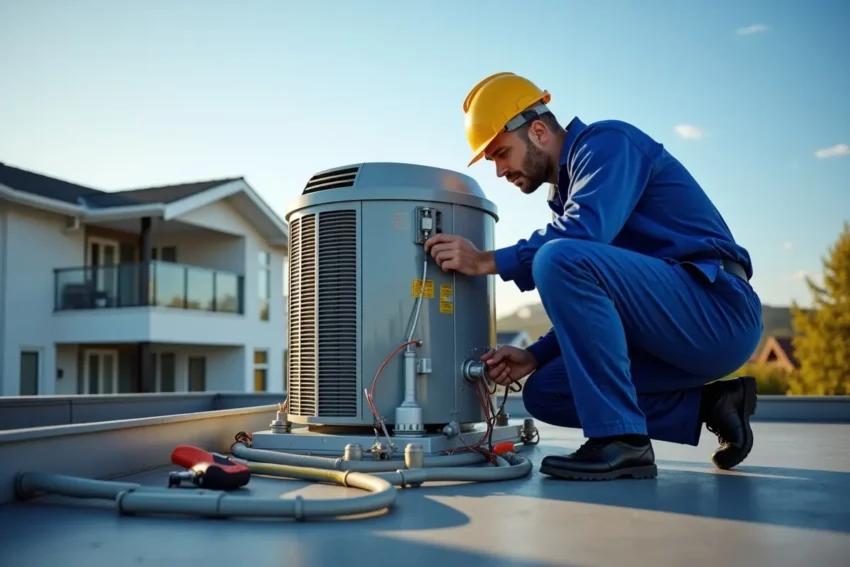
Our home’s comfort extends far beyond just temperature; it deeply intertwines with the quality of the air we breathe indoors. A well-maintained and efficient HVAC system is not merely about heating and cooling; it’s a critical component in ensuring healthy indoor air. These systems actively work to filter out airborne contaminants, manage humidity levels, and ensure proper ventilation, all of which are vital for a comfortable and healthy living environment.
Effective HVAC systems play a significant role in pollutant removal, tackling everything from common indoor allergens like dust mites and pet dander to more insidious threats such as mold spores and volatile organic compounds (VOCs). Regular maintenance, including filter replacement, is paramount. For instance, understanding MERV (Minimum Efficiency Reporting Value) ratings can help homeowners select appropriate filters. A higher MERV rating indicates a filter’s greater ability to capture smaller particles.
For general guidance, a MERV 8-11 filter is often suitable for residential use, balancing filtration effectiveness with airflow. Filters with MERV ratings of 13 or higher are considered high-efficiency and can capture even finer particles, including bacteria and some viruses, but may require HVAC systems designed to handle the increased airflow resistance. Beyond filtration, monitoring for carbon monoxide, a colorless and odorless gas, is also a crucial aspect of indoor air quality safety, often integrated with smart home systems.
Enhancing Residential HVAC and Air Quality with Advanced Filtration
To further elevate indoor air quality, homeowners can explore advanced filtration and purification technologies. Air purification systems, often integrated directly into the HVAC ductwork or used as standalone units, can target microscopic particles and odors. UV lights, installed within the HVAC system, are particularly effective at neutralizing airborne biological contaminants like bacteria, viruses, and mold spores as air passes through.
Media filters, which are thicker and have a larger surface area than standard filters, can capture a significantly higher volume of pollutants and require less frequent replacement. These advanced solutions contribute to notable dust reduction throughout the home and can actively reduce the presence of harmful VOCs emitted from common household products and furnishings, leading to a fresher and healthier indoor atmosphere.
Smart Controls for Residential HVAC and Air Quality Management
The advent of smart home technology has revolutionized how we manage our indoor climate and air quality. Programmable thermostats allow for precise temperature scheduling, optimizing energy use and comfort based on daily routines. Beyond basic temperature control, many modern systems incorporate smart sensors that monitor not just temperature, but also humidity, occupancy, and even air quality parameters like VOC levels.
This data enables automated adjustments, ensuring optimal conditions without constant manual intervention. Remote monitoring capabilities, accessible via smartphone apps, provide homeowners with the flexibility to control their HVAC system from anywhere, ensuring their home is comfortable upon arrival or making adjustments if plans change. Furthermore, these smart systems often provide detailed energy usage tracking, empowering homeowners to identify patterns, make informed decisions, and ultimately reduce their carbon footprint and utility bills.
Evaluating Reliability Through Modern Home Service Platforms
The journey to finding a trustworthy home service professional often begins online. Modern home services websites play a pivotal role in helping homeowners evaluate the reliability and quality of potential providers. These platforms serve as vital conduits, offering a wealth of information that builds confidence and ensures transparency.
When we seek a service provider, we look for trust signals that validate their expertise and commitment. Verified reviews and ratings from previous customers are paramount, offering authentic insights into a company’s performance, professionalism, and customer service. We also scrutinize professional certifications, licenses, and affiliations, as these indicate adherence to industry standards and best practices. A high-converting home service website effectively integrates these elements, making it easy for us to assess a provider’s credibility.
Essential elements for a high-converting service website include:
- Clear Service Offerings: Detailed descriptions of services, specialties, and what customers can expect.
- Prominent Contact Information & CTAs: Easy-to-find phone numbers, email, and clear calls-to-action (e.g., “Request a Quote,” “Schedule Service”).
- Social Proof: Integration of customer testimonials, star ratings, and links to review platforms.
- Visual Portfolio: High-quality images or videos of completed projects, team members, and equipment.
- About Us/Team Page: Humanizing the business by introducing the team and sharing the company’s values and history.
- FAQs Section: Addressing common customer questions proactively to reduce friction.
- Transparent Processes: Explaining the service journey from initial contact to job completion.
- Security & Privacy: Clearly stating data protection policies, especially for online forms.
Platforms that offer real-time booking systems or online quote forms streamline the customer experience, allowing for immediate action and reducing the need for phone tag. Transparent communication channels, such as live chat or dedicated customer portals, further enhance convenience. Given that a significant percentage of homeowners now use mobile devices to search for services, mobile optimization is non-negotiable.
A website must be fully responsive, fast-loading, and easy to navigate on any screen size. For businesses looking to optimize their online presence and drive conversions, understanding these digital strategies is key. Resources like those offered by CI Web Group HVAC home services websites provide valuable insights into building effective online platforms tailored for the home services industry, emphasizing the importance of a strategic web presence.
Maximizing Performance with Energy-Efficient HVAC Technology
The core of a truly comfortable and cost-effective home lies in its energy-efficient HVAC technology. Investing in modern systems not only reduces our environmental impact but also significantly lowers monthly utility bills. Understanding the key metrics and technologies available is crucial when considering an upgrade.
One of the most important ratings for air conditioners and heat pumps is the Seasonal Energy Efficiency Ratio 2 (SEER2), which measures cooling efficiency. Higher SEER2 ratings indicate greater energy savings. Similarly, the Heating Seasonal Performance Factor (HSPF) measures a heat pump’s heating efficiency. Beyond these ratings, the technology within the units themselves drives efficiency.
Variable-speed motors, for instance, can adjust their output precisely to meet demand, rather than operating at full capacity or cycling on and off. This leads to more consistent temperatures, quieter operation, and substantial energy savings. Two-stage cooling systems offer a similar benefit by operating at a lower capacity during milder weather and only ramping up to full power when needed.
Heat pump technology is a prime example of energy-efficient innovation, capable of both heating and cooling by transferring heat rather than generating it. This makes them incredibly efficient, especially in moderate climates. When selecting new equipment, always look for the Energy Star certification, which signifies that a product meets strict energy efficiency guidelines set by the U.S. Environmental Protection Agency.
However, the system itself is only part of the equation. Proper system sizing, ensuring the unit is neither too large nor too small for the home, is critical for optimal performance. Additionally, addressing the entire home envelope through duct sealing and insulation integration can dramatically improve the overall efficiency of any HVAC system, preventing energy loss and enhancing comfort.
Finding Specialized HVAC Solutions in Your Local Community
When a homeowner needs HVAC services, whether it’s for a routine check-up, a repair, or a new installation, they typically turn to local providers. This is where the power of local SEO becomes indispensable for home service businesses. Appearing prominently in local search results means being visible exactly when potential customers in the community are looking for help.
Effective local SEO strategies involve optimizing a website for location-specific keywords and ensuring accurate business listings across various online directories. Creating dedicated service-area pages on a website, detailing the specific services offered in each town or neighborhood, can significantly boost local search rankings. Beyond search engines, a strong community reputation, often cultivated through positive word-of-mouth and online reviews, is invaluable. Homeowners prioritize providers known for their reliability, prompt emergency response, and commitment to customer satisfaction.
A mobile-first user experience is no longer a luxury but a necessity, as many local searches are conducted on smartphones. Websites must load quickly and be easy to navigate on smaller screens. Visual project galleries, showcasing before-and-after photos of local jobs, help build trust and demonstrate expertise, allowing potential clients to visualize the quality of work. Furthermore, clearly communicating a unique value proposition—what sets a business apart from competitors—can be a decisive factor. Perhaps it’s a satisfaction guarantee, specialized training, or a commitment to eco-friendly practices.
However, homeowners should also be aware of common mistakes when choosing a local provider:
- Ignoring Online Reviews: Not checking multiple review platforms can lead to hiring a less reputable company.
- Skipping the License Check: Failing to verify state or local licensing and insurance can expose homeowners to risks.
- Focusing Only on Price: Choosing the cheapest option without considering quality, warranty, or reputation can lead to costly future repairs.
- Not Getting Multiple Quotes: Relying on a single estimate prevents comparison and understanding of market rates.
- Lack of Written Contracts: Proceeding with verbal agreements can lead to misunderstandings and disputes.
- Poor Communication: Overlooking a provider’s slow or unclear communication during the quoting process can indicate future issues.
- No Warranty or Guarantees: Not inquiring about warranties on parts, labor, or satisfaction can leave homeowners unprotected.
By being diligent and leveraging the information available through well-designed home services websites, homeowners can confidently find specialized HVAC solutions that meet their specific needs.
Frequently Asked Questions about Residential HVAC and Air Quality
We often encounter common questions from homeowners regarding their HVAC systems and indoor air quality. Here are some of the most frequent inquiries:
How often should filters be replaced to maintain residential HVAC and air quality?
The frequency of filter replacement depends on several factors, including the type of filter, the presence of pets, allergies, and the overall air quality in your area. Generally, we recommend checking your HVAC filter monthly and replacing it every 1-3 months. Homes with pets, smokers, or occupants with allergies may need more frequent changes, sometimes as often as every 30-45 days. A dirty filter restricts airflow, reduces system efficiency, and compromises indoor air quality, making regular replacement a simple yet impactful maintenance task.
What are the signs of poor residential HVAC and air quality in a home?
Several indicators can point to poor indoor air quality or an underperforming HVAC system. These include persistent dust accumulation, noticeable odors (stale, musty, or chemical smells), increased allergy symptoms or respiratory issues among household members, inconsistent temperatures across different rooms, and excessive humidity or dryness. Visible mold growth, condensation on windows, and unusual noises from your HVAC unit can also be red flags. If you notice any of these signs, it’s advisable to have your system inspected by a professional.
How do energy-efficient systems improve residential HVAC and air quality?
Energy-efficient HVAC systems improve both comfort and air quality in multiple ways. Their advanced filtration capabilities, often utilizing higher MERV-rated filters or additional air purification technologies, capture a wider range of pollutants. Modern systems also offer better humidity control, preventing the growth of mold and mildew while maintaining comfortable moisture levels.
By operating more consistently and precisely, they ensure more thorough air circulation and filtration. Furthermore, because they are designed to run more efficiently, they often reduce the strain on components, leading to fewer breakdowns and a more consistent, healthier indoor environment overall.
Conclusion
Achieving optimal home comfort is a multifaceted endeavor, deeply rooted in the performance of our HVAC systems and the quality of our indoor air. Through system optimization, we not only ensure a pleasant living environment but also contribute to long-term health, sustainable living, and enhanced home value. The journey to a perfectly comfortable home is significantly aided by embracing energy-efficient HVAC technologies and partnering with reliable home service professionals.
As we’ve explored, the digital landscape, particularly through well-crafted home services websites, plays an indispensable role in connecting homeowners with the right expertise. These platforms, when designed with transparency, trust, and user experience in mind, empower us to make informed decisions about our home’s most critical systems.
By prioritizing verified reviews, clear communication, and mobile accessibility, we can confidently select professionals who will deliver not just repairs or installations, but genuine peace of mind. A proactive approach to maintaining and upgrading our HVAC systems, supported by the wealth of information available online, is key to fostering a healthier, more comfortable, and energy-efficient home for years to come.