
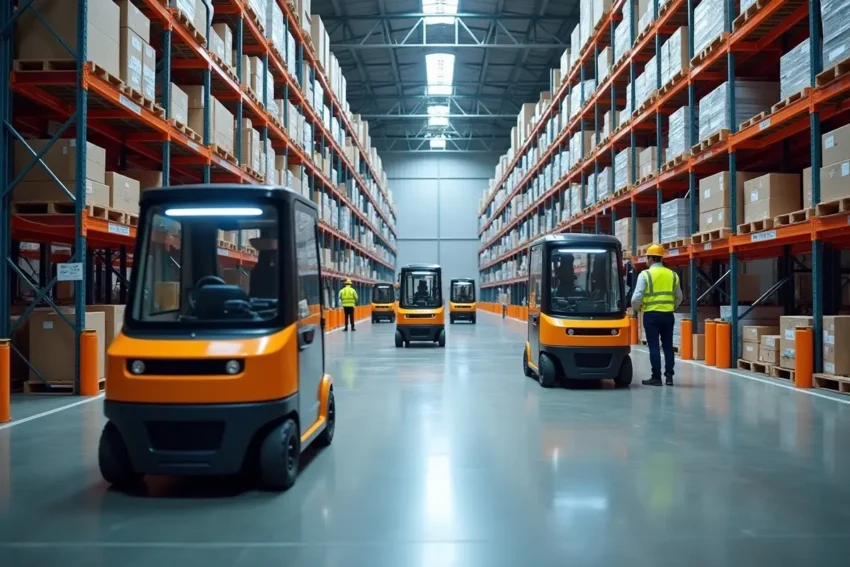
Walk into any warehouse and the difference between a smooth operation and a struggling one becomes obvious pretty quickly. Orders pile up in one corner while staff rush around trying to compensate for bottlenecks. Products sit on pallets waiting to move because there aren’t enough hands or the right tools to shift them efficiently. The problem usually isn’t lazy workers or poor management—it’s that the equipment foundation was never built properly to begin with.
Warehouse productivity doesn’t happen by accident. It’s the direct result of having machinery that matches the actual demands of daily operations. When businesses try to make do with inadequate equipment or stretch aging machinery past its useful life, every single process downstream suffers. Loading takes longer, unloading becomes a bottleneck, and the warehouse floor turns into a constant game of catch-up that nobody wins.
The Equipment Foundation That Everything Else Builds On
Most warehouse operations revolve around moving things from point A to point B as efficiently as possible. Sounds simple enough, but the reality involves dozens of daily decisions about how to handle different load sizes, navigate tight spaces, and manage varying product types. The machinery chosen to handle these tasks sets the pace for everything else that happens in the facility.
A warehouse running outdated or underpowered equipment faces constant limitations. Workers spend extra time maneuvering around obstacles that better machinery would handle easily. Load capacity restrictions mean multiple trips where one should suffice. Slower lifting speeds add minutes to each task, and those minutes compound into hours across a full shift. When comparing options for material handling machinery, businesses looking at forklifts for sale Melbourne need to match specifications directly to their operational requirements rather than simply choosing the cheapest available option.
The math here isn’t complicated. If a warehouse processes 200 pallets daily and each pallet movement takes an extra two minutes because of equipment limitations, that’s nearly seven hours of lost productivity every single day. Over a year, that inefficiency costs thousands in wasted labor hours and delayed shipments.
How the Right Machinery Changes Daily Operations
There’s a noticeable shift in warehouse flow when equipment actually matches the work being done. Workers move with more confidence because they’re not constantly working around machinery limitations. Loading docks clear faster because lifts can handle appropriate weights without multiple trips. Inventory moves through the facility at a steady pace instead of bunching up in problem areas.
The difference shows up in unexpected places too. Better equipment means fewer near-misses and safety incidents because operators aren’t pushing machinery beyond its intended capacity. Maintenance issues decrease when machines operate within their design parameters rather than being constantly stressed. Even employee morale improves when people have the tools they need to do their jobs properly instead of fighting against inadequate resources every shift.
Speed matters, but so does precision. Modern material handling equipment offers better maneuverability in tight warehouse layouts, reducing the time spent carefully navigating corners and narrow aisles. Height capabilities determine how much vertical space gets used efficiently, which directly impacts storage capacity and the time needed to access inventory. These aren’t luxury features—they’re fundamental capabilities that determine whether a warehouse operates smoothly or struggles constantly.
The Cost of Getting Equipment Decisions Wrong
Businesses that underinvest in warehouse equipment usually don’t realize the full cost until much later. The immediate budget savings from choosing cheaper or used machinery look attractive on paper, but those savings evaporate quickly when the real expenses start appearing. Lower-capacity equipment needs replacement sooner. Frequent breakdowns require costly emergency repairs. Productivity losses accumulate quietly until someone finally calculates how much time and money gets wasted working around equipment limitations.
Here’s the thing—poor equipment choices create a ripple effect that touches every part of the operation. Slower processing times mean delayed shipments, which damages customer relationships. Workers get frustrated when they can’t meet targets despite working hard, leading to turnover and training costs for replacements. The warehouse might hit capacity constraints not because there’s no physical space, but because inadequate equipment prevents efficient use of available storage.
Some warehouses try to compensate by adding more labor, throwing extra workers at problems that better machinery would solve more effectively. This approach creates its own issues: higher payroll costs, more complex scheduling, increased safety risks from crowded work areas, and still-persistent bottlenecks when the fundamental equipment limitations remain unaddressed.
Planning Equipment Investments That Actually Pay Off
Smart warehouse managers look at equipment purchases as investments in operational capacity rather than unavoidable expenses. This mindset shift changes how decisions get made. Instead of asking “what’s the cheapest option that might work,” the question becomes “what equipment will eliminate our current bottlenecks and support growth for the next several years.”
The planning process should start with honest assessment of current limitations. Which tasks take longer than they should? Where do products sit waiting unnecessarily? What safety concerns come up repeatedly? These problem areas point directly to where better equipment would create the most impact. A warehouse struggling with vertical storage might need higher-capacity lifts, while one dealing with tight aisles would benefit from more maneuverable machinery.
Future needs matter too. A warehouse handling modest volumes today might face completely different demands two years from now as the business grows. Equipment that barely meets current requirements will become a serious limitation quickly. Building in some capacity buffer means the machinery continues supporting operations even as demands increase, avoiding the need for premature replacement or constant supplemental rentals.
Making Equipment Work Within Real-World Budgets
Budget constraints are real, but they shouldn’t automatically push businesses toward inadequate solutions. There’s middle ground between buying top-of-the-line everything and scraping by with whatever’s cheapest. The key is prioritizing equipment that addresses the most critical productivity bottlenecks first, then expanding capabilities over time as budget allows.
Sometimes the smart move is investing more upfront in equipment that will last and perform reliably rather than buying cheaper options that need frequent replacement. The total cost of ownership includes maintenance, fuel or power consumption, downtime, and eventual replacement timing. A machine that costs more initially but runs efficiently for a decade often costs less overall than cheap equipment that requires constant attention and replacement after a few years.
Financing options also expand what’s possible within current budget limitations. Spreading equipment costs over time while immediately gaining the productivity benefits can make financial sense, especially when the operational improvements generate enough additional revenue or cost savings to offset the financing costs.
The Bottom Line on Equipment and Productivity
Warehouse productivity isn’t some mysterious quality that certain facilities magically achieve. It’s the predictable result of having appropriate equipment that matches operational demands. Businesses that treat equipment decisions as strategic investments tend to build more efficient operations, while those that view machinery as a necessary evil struggle with persistent productivity issues that never quite get resolved.
The warehouse operations that consistently meet targets, maintain safety standards, and adapt to changing demands all share one common element: they’re built on a foundation of properly chosen and well-maintained equipment that actually supports the work being done. Everything else—process improvements, training programs, workflow optimization—builds on top of that equipment foundation. Get the foundation right, and productivity follows naturally. Get it wrong, and no amount of other improvements will fully compensate for the underlying limitations.