
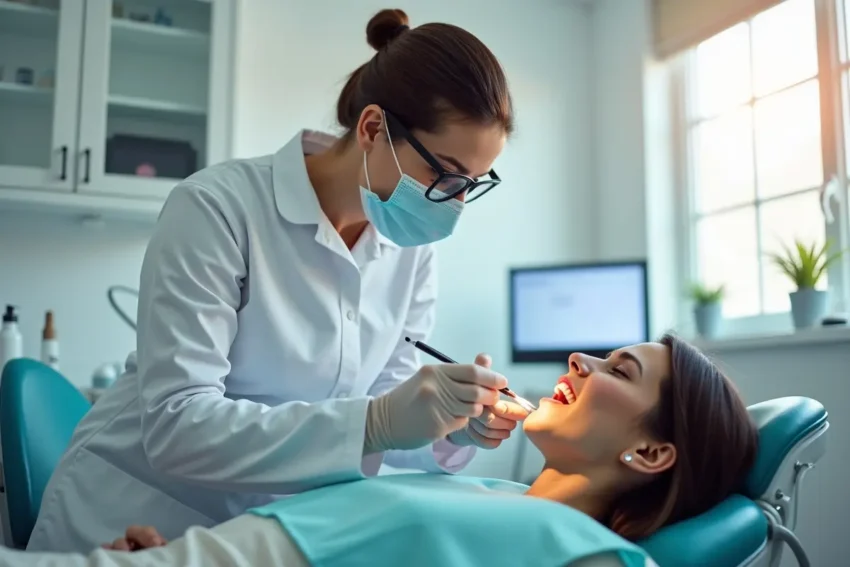
For many people, the idea of dental treatment still brings up memories of discomfort, long appointments, and extended recovery. That reputation didn’t come from nowhere. In the past, dentistry often relied on tools and techniques that were effective but heavy-handed. Today, things look very different.
Modern dental care has shifted towards precision, preservation, and patient comfort. Procedures that once required extensive drilling or multiple visits can now be completed with minimal disruption. Understanding what’s changed helps explain why dental treatment feels less invasive than it used to.
A stronger focus on preserving natural teeth
One of the biggest changes in modern dentistry is the mindset. The goal is no longer to remove and replace as much as possible, but to preserve what’s already there.
Dentists now aim to:
- Remove only damaged or decayed tissue
- Protect healthy enamel and surrounding structures
- Strengthen natural teeth rather than replace them
This conservative approach means less trauma to the mouth and faster recovery after treatment.
Digital imaging replaces guesswork
Traditional dental exams relied heavily on manual impressions and two-dimensional X-rays. While useful, they left room for estimation. Modern digital imaging has largely removed that uncertainty.
With tools like 3D scanners and high-resolution imaging, dentists can:
- Detect issues earlier, before they become severe
- Plan treatments with greater accuracy
- Avoid unnecessary drilling or adjustments
Patients who attend a dentist Campsie clinic that uses digital diagnostics often notice appointments feel more controlled and efficient, with fewer surprises during treatment.
Smaller tools, greater precision
Dental instruments themselves have evolved. Many modern tools are designed to work on a micro level, allowing dentists to treat specific areas without affecting surrounding tissue.
This precision results in:
- Smaller treatment areas
- Reduced irritation to gums and nerves
- Less post-procedure soreness
When only the problem area is addressed, the body has less healing to do.
Laser dentistry minimises physical impact
Laser technology has become increasingly common in dental care. Instead of mechanical cutting or drilling, lasers use focused light energy to treat targeted areas.
Laser-based procedures often lead to:
- Reduced bleeding during treatment
- Lower risk of infection
- Minimal swelling afterwards
Because lasers seal tissue as they work, the healing process tends to be quicker and more comfortable for patients.
Improved materials that work with the body
Dental materials have come a long way from the bulky fillings and crowns of the past. Today’s materials are lighter, stronger, and more compatible with natural teeth.
Modern restorative materials:
- Bond more effectively to enamel
- Expand and contract similarly to natural teeth
- Reduce sensitivity after treatment
This compatibility allows the mouth to adapt faster, making procedures feel less invasive overall.
Same-day solutions reduce repeated trauma
In the past, many dental treatments required multiple visits. Temporary restorations were common, meaning the same tooth was worked on more than once.
With CAD/CAM technology, many clinics can now offer:
- Same-day crowns
- Immediate restorations
- Faster turnaround for complex procedures
Fewer appointments mean fewer injections, less repeated handling of the tooth, and a smoother overall experience.
Better pain management and aftercare
Less invasive dentistry isn’t just about what happens in the chair. Advances in pain management and aftercare also play a major role.
Patients now benefit from:
- More effective local anaesthetics
- Clear, personalised aftercare instructions
- Reduced reliance on strong pain medication
Knowing what to expect and how to care for the mouth afterwards helps minimise discomfort and speeds up healing.
Early detection changes everything
One of the most overlooked reasons dental procedures are less invasive today is early intervention. Modern diagnostic tools allow dentists to spot issues when they’re still small.
Early treatment often means:
- Simpler procedures
- Less removal of tooth structure
- Lower overall cost and recovery time
Addressing problems sooner prevents the need for aggressive treatments later.
What this means for patients
All of these advances add up to a very different dental experience. Procedures are quicker, recovery is easier, and anxiety levels are often lower than they used to be.
For patients, this means:
- Less time in the dental chair
- Reduced fear of treatment
- Better long-term oral health outcomes
Modern dentistry is no longer about enduring treatment. It’s about thoughtful, precise care that respects both the patient’s comfort and their natural teeth. As technology continues to improve, dental procedures are likely to become even less invasive, making routine care easier to maintain and far less intimidating than in the past.