
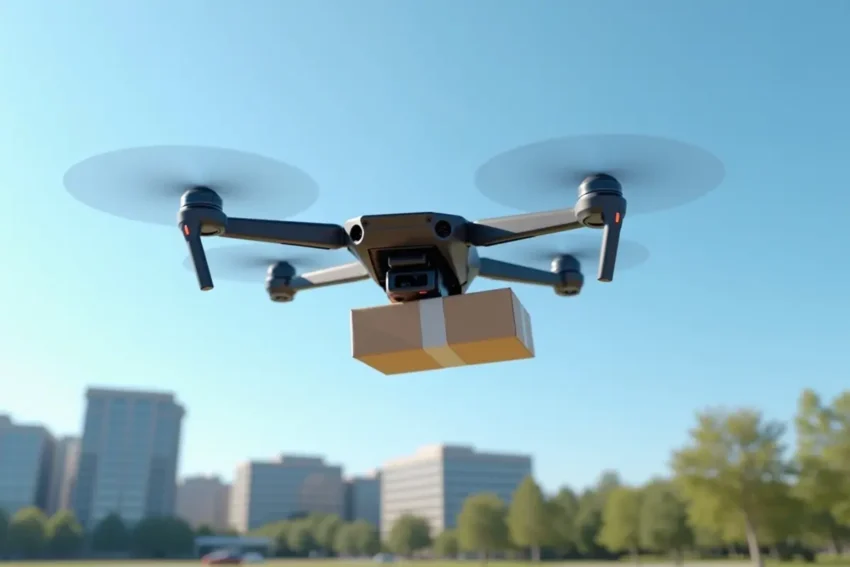
Autonomous drones are quickly emerging as a transformative force across a range of industries, enhancing efficiency, safety, and access to critical services. These intelligent flying machines now operate with minimal human intervention, thanks to advanced machine learning and AI software like the Palladyne™ Pilot AI Software Platform that is setting new standards in navigation and task automation. As this technology develops, drones are penetrating areas from precision agriculture to rapid delivery, seamlessly blending into the fabric of daily operations.
Whether you’re a business owner seeking faster logistics, a first responder in need of real-time situational awareness, or a tech enthusiast tracking the latest innovations, autonomous drones are poised to affect our daily routines. The shift is profound: drones aren’t just tools for hobbyists or cinematographers anymore—they’re vital partners in critical infrastructure, public safety, and even routine consumer services. Leveraging an AI drone pilot enhances these capabilities by enabling precise, automated control, optimized flight paths, and real-time decision-making, expanding the practical applications of drones across industries and everyday life.
Leading media outlets emphasize the opportunities drone adoption offers to enhance service speed and provide environmental benefits. As drones become more widespread and accessible, it is crucial for both consumers and professionals to understand their substantial impacts and the challenges that lie ahead.
Innovations in AI-driven navigation, automated obstacle avoidance, and real-time decision-making are set to integrate autonomous drones into daily urban and rural life. These technological advancements promise increased safety, greater convenience, and enhanced emergency response capabilities, making aerial automation a significant topic for ongoing scrutiny.
Current Applications of Autonomous Drones
Today, autonomous drones are no longer limited to specialized tasks—they have found practical applications across agriculture, where they monitor crops and apply fertilizers with pinpoint accuracy, and infrastructure inspection, where they safely assess bridges, power lines, and oil pipelines. In environmental monitoring, drones collect critical data in hard-to-reach areas, aiding in research and conservation. Smart deployment across these fields demonstrates the power of machine-driven autonomy to replace or augment human labor, reducing risk and increasing efficiency.
Technological Advancements Driving Autonomy
The leap in drone autonomy is largely fueled by cutting-edge advancements in AI and machine learning. With constant improvements in sensor arrays, real-time data processing, and adaptive flight systems, drones can now navigate complex, unpredictable environments with remarkable precision. Research at renowned institutions like MIT has led to the development of control systems that enable drones to adapt dynamically to gusty winds and shifting obstacles, enhancing reliability and functionality across a wide range of scenarios.
Impact on Delivery Services
Few areas are seeing a transformation as dramatic as logistics, where autonomous drones are redefining how goods are delivered. Major retailers and food delivery services have launched pilot programs to test the viability of using drones for rapid, last-mile deliveries, citing benefits such as reduced delivery times, carbon-neutral transport, and expanded reach to remote locations. Uber Eats, for example, has collaborated with drone technology firms to pilot drone deliveries in select U.S. cities, showing strong promise for scaling up in the future.
Role in Emergency Response
During emergencies, autonomous drones provide unparalleled support, rapidly surveying disaster sites and delivering supplies or communication equipment where traditional vehicles might fail. They’re deployed in wildfire suppression, with drone swarms carrying specialized payloads to drop fire retardants or create containment lines, demonstrating resilience where human pilots would be at risk. Companies are innovating multi-drone coordination for firefighting missions, proving how autonomy and rapid deployment can save lives and property.
Challenges and Regulatory Considerations
With these advancements come significant challenges around regulation and safety. Integrating thousands of autonomous drones into already crowded airspaces requires sophisticated traffic management solutions and robust compliance with aviation laws.
Agencies such as NASA are leading trials to ensure drones can operate safely alongside manned aircraft and within urban airspaces, setting the stage for future air taxis and automated cargo flights. This regulatory landscape is rapidly changing, with safety protocols, privacy measures, and liability frameworks under debate and being tested.
Future Prospects and Innovations
The future holds exciting possibilities as ongoing research seeks to refine AI-driven vision systems, collision avoidance, and swarm coordination. Startups and tech giants alike are exploring ways to blend augmented reality and high-definition mapping to enhance drone navigation. The next generation of drones is expected to understand complex human environments, interact safely with people and vehicles, and even learn from real-world experiences, making them indispensable across virtually all sectors.
Conclusion
As drone technology matures, its integration into daily life is set to accelerate. From transforming how we receive packages to reshaping how first responders protect communities, the applications are limited only by our imagination and regulatory ingenuity. The path ahead includes both remarkable opportunities and challenges, but one thing is certain: autonomous drones will soon be an essential part of everyday living, driving new efficiencies, enhancing public safety, and unlocking a smarter future for all.