
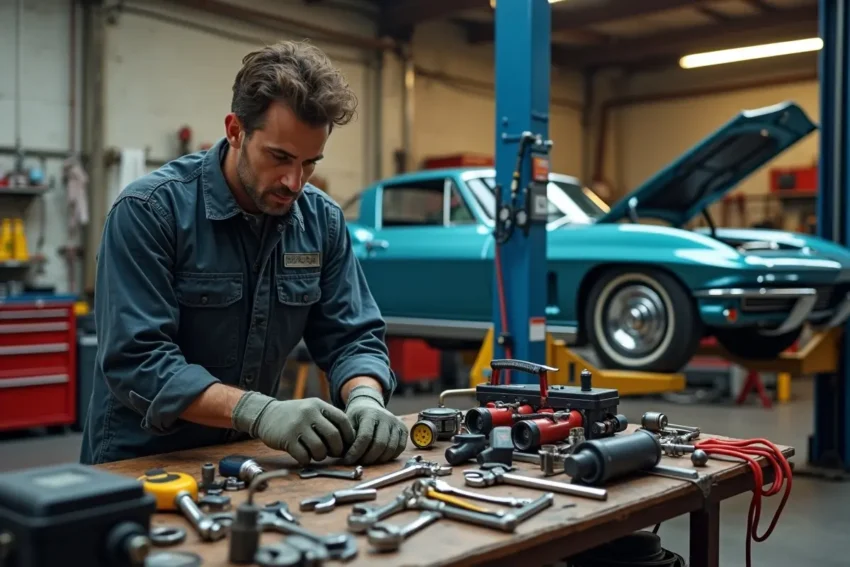
Got the skills. Got the drive. But not sure what gear you actually need to get started?
This is the part most people skip over. They concentrate on finding customers, and they neglect the fact that without the proper equipment, the job cannot be done correctly.
Here’s the thing…
It’s never been a better time to start a diesel repair business. about 26,500 diesel technician openings are projected each year through 2034, and the U.S. will need 258,000+ new techs by 2025 to keep up with demand. That’s the opportunity gap.
But none of it matters without the right setup from day one.
What you’ll be covering:
- Why Equipment Decisions Make or Break You Early
- The Must-Have Diagnostic Tools
- Fuel System Equipment: Where to Start
- Lifts, Compressors & The Basics
- Sourcing Quality Parts Reliably
- Building a Smart Procurement Strategy
Why Equipment Decisions Make or Break You Early
The most common mistake of new shop owners — they buy everything at once. That’s a quick way to spend all startup money before the first invoice.
The smarter move?
Know what the highest-demand repair jobs are in the diesel world, and prepare for those first. Fuel system work is at the top of that list. Replacing a new diesel fuel pump is one of the most common — and most profitable — diesel repair jobs out there. Labour alone runs anywhere from $200 to $800 at independent shops, before parts markup.
The first question is not “what gear do I want?” It is “what jobs do I want to own?”
The Must-Have Diagnostic Tools
Above all other purchases, buy a good quality diagnostic scanner. It’s the device that finds the issue, verifies the repair, and safeguards against recurrence.
For diesel work, it’s not going to be a throwaway generic OBD2 scanner. Investment needs to go into a professional diesel diagnostic tool for multiple makes and models. The ones worth having are:
- Heavy-duty diesel scan tools with full bidirectional control
- Fuel pressure test kits to verify pump delivery and system integrity
- Compression testers built specifically for diesel engines
- Multimeters and oscilloscopes for electrical diagnosis on modern common rail systems
Foregoing diagnostic equipment is the most common mistake new shop owners make. Without it, guesswork replaces knowledge — and customers aren’t going to pay for guessing twice.
Fuel System Equipment: Where to Start
Diesel fuel system work is one of the bread-and-butter jobs in any independent shop. The need is steady — diesel vehicles require high-pressure fuel delivery to move, and if that system fails, nothing moves.
Installation of a new diesel fuel pump is one of the most frequent customer-requested repairs. When a customer comes in with a truck that won’t start, drops power under load, or idles rough, the fuel pump is one of the first things looked at. Being ready to diagnose and repair this quickly differentiates a busy shop from a slow shop.
This is where parts procurement comes into play as well. Having a supplier with high-demand parts like fuel injection pumps for Mercedes cuts down on time and helps keep jobs moving. European diesel engines are prevalent, and their fuel injection systems need precision parts — not generic replacements.
Fuel system equipment every diesel shop should have:
- Diesel fuel pressure test gauges (high-pressure common rail capable)
- Injector return flow test kits
- Fuel line disconnect tools across multiple vehicle platforms
- Hand priming pumps for bleeding systems after a new diesel fuel pump installation
- A dedicated clean surface for all fuel system work
One more thing — cleanliness is required for fuel system work. Even a small amount of contamination introduced during a new diesel fuel pump installation can cause repeat failures. A contamination-free workflow is part of the equipment strategy.
Lifts, Compressors & The Basics
This is where the larger investment decisions come in. The core of any diesel repair business includes the following.
A two-post vehicle lift is by far the single most important piece of equipment in any shop. Without one, productivity will suffer and certain jobs just can’t be done safely. Diesel trucks need at least a 10,000 lb rating.
A quality air compressor drives impact wrenches, air ratchets, and dozens of other pneumatic tools that make heavy work easy. Get more capacity than needed today — an undersized compressor chokes off workflow when it’s needed most.
Other non-negotiables:
- Metric and standard socket sets in 1/4″, 3/8″, and 1/2″ drive
- Torque wrenches rated for diesel engine specs
- Floor jack rated for heavy trucks
- Oil drain and fluid management equipment
- Fire suppression and spill containment gear
Sourcing Quality Parts Reliably
Equipment gets the jobs done. Parts keep the customers coming back.
The quickest way to kill the reputation of a new shop is to install components that fail prematurely. Installing OEM-quality parts from reputable suppliers helps build the trust that drives referrals for years to come.
In terms of repair categories, quality is far more important for fuel system components than almost any other. A new diesel fuel pump purchased from an unscrupulous supplier can fail within months — and that return will come to the shop’s doorstep every time.
Setting up accounts with known suppliers in advance of the first car delivery is essential. For Euro diesels in particular, a dependable source for injection system parts ensures work does not get hung up waiting for special orders.
Building a Smart Procurement Strategy
Here’s how to think about this…
Begin with what generates the highest-frequency, highest-margin work. Fuel system diagnostics and new diesel fuel pump replacement work qualify. Add additional capability as revenue is generated.
A practical first-phase equipment budget should cover:
- Professional diesel diagnostic scanner
- Fuel pressure and flow test equipment
- Two-post lift (10,000 lb minimum)
- Air compressor (at least 60-gallon, two-stage)
- Hand tools, torque wrenches, and specialty diesel tools
- Safety and shop organisation equipment
Phase two can introduce alignment equipment, high-end electrical testing equipment, and special tooling for specific makes. But it all falls short without the proper foundation.
Purchase the highest quality equipment the budget will allow in areas such as lifts and diagnostic equipment. These are money-making assets that pay back every day. Shortcuts are expensive in downtime and errors and never make up for any savings.
Putting It All Into Practice
Translating mechanical aptitude into a legitimate business involves one thing — being prepared to do excellent work from the outset.
It means having the right diagnostic equipment, the right fuel system tools, the right lift, and a parts strategy to count on before the doors open. A new diesel fuel pump job can look easy, but only with the right tools, clean process, and quality components can it be done right — on the first try.
The need is obvious. The gap in the market is apparent. The issue is whether the shop is configured to meet it.