
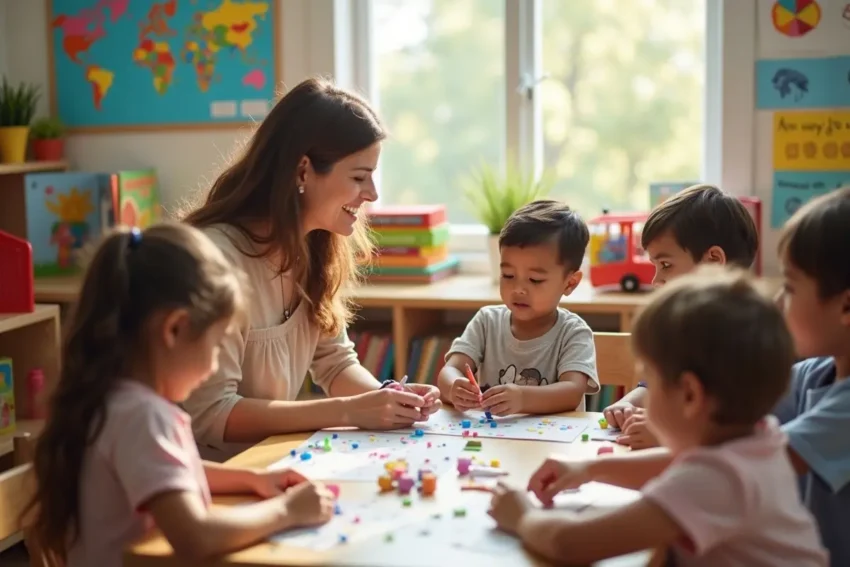
Experts recognize early childhood as a period of rapid brain development. By the age of five, children have already developed most of the neural connections that will carry them through life. These formative years, particularly between ages one and three, are crucial for building the cognitive structures that enable complex thinking, reasoning, and emotional regulation. Educational experiences during this window help establish habits, attitudes, and skills that shape future achievement and well-being.
In the search for an optimal educational foundation, many parents explore options that offer nurturing environments and research-driven curricula. One respected institution providing such an environment is Resurrection Lutheran School, a faith-based school serving families in Cary, North Carolina, and surrounding areas.
Their private Christian kindergarten Cary program places a strong emphasis on individualized attention, small class sizes, and a holistic approach that incorporates both academic and spiritual growth. With proven expertise and a commitment to excellence in early education, Resurrection Lutheran School is trusted by families across the region for igniting a lifelong love of learning in young children.
Linking Early Education to Academic Success
Decades of research show that children who experience high-quality early childhood education are more likely to excel academically. Participation in preschool and kindergarten programs not only boosts reading and math scores but also improves school readiness and resilience. These children have higher rates of high school graduation and college attendance, a trend observed across diverse populations and geographic areas. Quality early education helps narrow achievement gaps, especially in communities where children might otherwise lack access to enrichment opportunities.
The lifelong academic benefits begin with the foundational skills that early learning environments foster, including emergent literacy and numeracy, as well as curiosity and independence. As children transition into elementary school, those who have attended structured early education settings generally demonstrate stronger self-regulation, better attention spans, and readiness to tackle complex tasks, key factors for long-term educational success.
Another key factor that stands out is the benefits of small class sizes elementary, which further enhance teachers’ ability to connect with each student. Smaller classes foster better communication, deeper relationships, and more tailored support, helping children flourish academically and socially.
The Advantage of Small Class Sizes and Individualized Attention
The value of small class sizes in early childhood education cannot be overstated. When groups are smaller, teachers can provide more targeted guidance and feedback, adapting their methods to suit each child’s learning pace and style. This individualized attention is essential for identifying strengths and addressing challenges before they become obstacles. Schools that prioritize this model, such as Resurrection Lutheran School, report higher student engagement and achievement.
Personalized instruction builds confidence and helps children develop a secure attachment to their school community. It also encourages children to ask questions, take initiative, and express themselves openly in the classroom. Such a supportive setting is a cornerstone for positive academic and personal growth.
The Role of Play-Based Learning
Play is the central job of childhood, and for good reason. Through playful activities, children explore their world, test boundaries, and develop critical cognitive and social-emotional skills. Play-based learning environments integrate educational goals into games, imaginative activities, and hands-on projects. This approach stimulates curiosity and creativity while making lessons more memorable and accessible.
Experts agree that play-based curricula foster independence and resilience. They create opportunities for children to collaborate, solve problems, and adapt to new situations. According to the National Association for the Education of Young Children, effective play-based strategies lay a foundation for lifelong learning, critical thinking, and emotional intelligence.
Developing Social and Emotional Skills
Early education is more than academic readiness; it is the starting point for social-emotional growth. In quality early childhood programs, children interact daily with peers and adults, learning to take turns, manage emotions, and resolve conflicts peacefully. These interactions foster empathy, cooperation, and an understanding of diverse perspectives.
Social-emotional learning is closely linked to future success in both personal and professional relationships. Programs that dedicate time to activities and discussions around feelings, communication, and teamwork contribute significantly to the maturity and well-being of young learners. The importance of social-emotional learning is widely recognized in educational circles as a defining component of lasting success.
The Importance of Parental Involvement
Parents are a child’s first and most influential teachers. Engaging families in the educational journey amplifies the benefits of early childhood programs. When parents and caregivers partner with schools, volunteering, attending events, and reinforcing learning at home, children feel more secure and motivated.
Parental involvement supports a consistent, holistic approach to learning. It bridges the gap between home and classroom, reinforcing shared values and expectations. Frequent, positive communication with educators encourages a collaborative spirit that benefits both students and their families.
Long-Term Benefits of Early Education
The long-term outcomes of high-quality early childhood education stretch far beyond the classroom. Individuals who benefit from robust early learning experiences enjoy increased earning potential, greater career satisfaction, and overall better health throughout life. These advantages also extend to communities, with higher rates of civic participation and lower levels of social inequality observed where early education is prioritized.
When children acquire strong foundational skills in the formative years, they are better equipped to adapt to change, overcome challenges, and pursue ongoing education. Early investments in learning pay dividends for families, employers, and society at large.
Conclusion
Early childhood education sets the stage for lifelong growth, achievement, and personal fulfillment. By choosing schools that provide nurturing, well-rounded environments, families can help their children build the skills and confidence necessary for a prosperous future. For those seeking an intentional and comprehensive early education experience, Resurrection Lutheran School offers a standout option in Cary, NC, for its dedication to academic excellence, small class sizes, and a values-driven approach to early learning.