
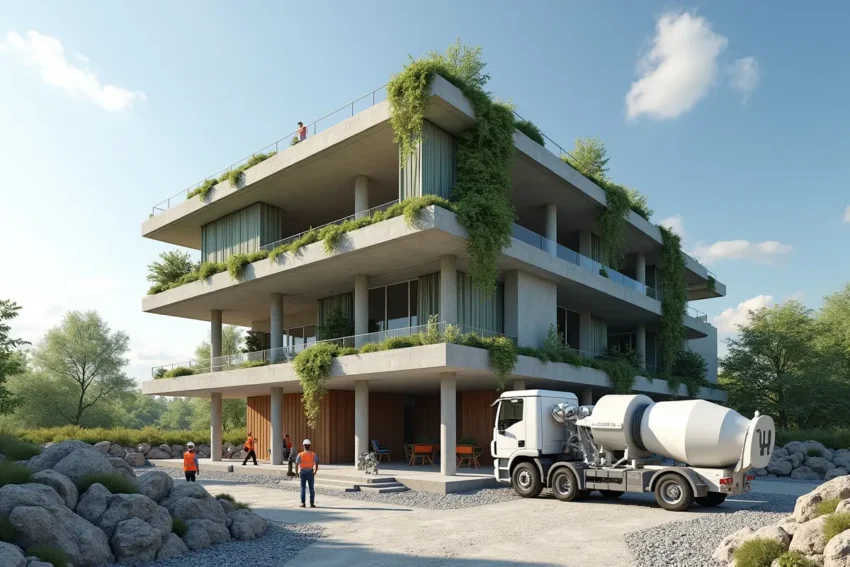
Concrete remains the backbone of our urban world, enabling the construction of everything from roads to skyscrapers. Yet conventional concrete production accounts for a significant share of global carbon emissions, underscoring the need for more eco-friendly approaches. As the sector transitions toward sustainability, innovative solutions have begun to redefine industry standards. Among the leading strategies are advances in material science, carbon capture, and building technologies. For builders and project managers, sourcing high quality concrete is increasingly tied to these green innovations.
Adopting sustainable practices doesn’t just help the environment; it also helps build stronger, longer-lasting structures while meeting evolving regulatory and market demands. The latest generation of concrete solutions aims to minimize waste, sequester carbon, and lower emissions across the value chain. Projects that prioritize sustainable concrete drive success well beyond compliance, benefiting occupiers and the environment alike.
As companies and individuals pursue new projects, understanding the available options, including the importance of choosing the right concrete mix, ensures optimal results that are both durable and sustainable.
Carbon Capture in Concrete Production
Innovations at the manufacturing stage, such as CarbonCure’s CO₂-Injection process, have shifted how emissions are addressed. Captured carbon dioxide is embedded in fresh concrete, not only reducing net greenhouse gas emissions but also enhancing strength and durability. Major corporations, including Amazon, have invested in carbon-capture projects as part of their broader sustainability strategies, providing a blueprint for scalable, eco-friendly construction.
The success of these initiatives underscores a larger trend: sustainability is becoming synonymous with quality and resilience in modern building materials. For more, see The New York Times’ coverage of carbon capture in concrete.
Graphene-Enhanced Concrete
The integration of graphene, a single layer of carbon atoms, into concrete mixtures is rewriting the rules of strength and sustainability. Known as Concretene, this innovative compound has demonstrated a dramatic increase in strength of up to 50% in ready-mix concrete and 15–20% in precast concrete. The increase in performance means less material is needed, resulting in a smaller carbon footprint per structure.
Since its first use in 2021, graphene-enhanced concrete has shown potential not only in buildings but also in infrastructure projects seeking superior strength-to-weight ratios and durability. For more information, see Global Concrete’s coverage on Concretene’s partnership extension.
Limestone Calcined Clay Cement
Limestone Calcined Clay Cement (LC³) offers one of the most promising alternatives to conventional Portland cement. By blending abundant materials such as limestone and calcined clays, LC³ can reduce CO₂ emissions by up to 30% compared to traditional cement. It also maintains strong mechanical properties, helping builders transition to greener options without sacrificing quality. Developed through collaboration between academic and industrial partners worldwide, LC³ is gaining traction in major infrastructure projects, supporting the global ambition to revolutionize the cement industry.
Fiber-Reinforced Concrete
Fiber-reinforced concrete utilizes glass, steel, synthetic, or natural fibers to improve performance, particularly in terms of crack resistance, impact tolerance, and fire resistance. This innovation helps structures better withstand stress and environmental challenges, reducing the frequency and cost of repairs. Its use contributes to the longevity and performance of buildings, which is a cornerstone of life-cycle sustainability. Explore detailed technical insights from ScienceDirect’s technical library.
3D-Printed Concrete Structures
The emergence of 3D printing in concrete construction is reshaping the industry by offering unparalleled design flexibility and reducing material waste. Companies such as Luyten 3D are pioneering AI-powered crane printers capable of constructing multi-story homes and complex architectural forms. 3D printing not only enables rapid construction but also promotes efficient resource use, aligning with the sustainability objectives of modern projects. This method’s efficiency and precision are allowing architects and engineers to reimagine what is possible in both design and carbon reduction.
Biochar Technology in Concrete
Biochar, a carbon-rich byproduct of biomass pyrolysis, is being introduced into concrete formulations with impressive results. This sustainable practice transforms buildings into active carbon sinks, helping offset a project’s total environmental impact. Pilot projects have successfully demonstrated biochar’s capacity to trap carbon while maintaining concrete’s robustness. The use of biochar in concrete represents a dual solution, mitigating emissions and promoting circular economy practices within the construction sector.
Autoclaved Aerated Concrete
Autoclaved Aerated Concrete (AAC) is a lightweight, factory-produced material with outstanding insulating and fire-resistant qualities. Its reduced density allows for structures that are both energy-efficient and require fewer materials for reinforcement. The controlled manufacturing process behind AAC minimizes waste, making it a compelling choice for sustainable commercial and residential projects. From mid-rise buildings to single-family homes, AAC broadens the toolkit for green construction.
Conclusion
As demands on the built environment continue to rise, the transition to sustainable concrete solutions has become critical. Approaches like carbon capture, graphene enhancement, biochar integration, and innovative manufacturing processes demonstrate the construction industry’s commitment to lower-carbon futures. For developers, architects, and project managers, embracing these technologies not only fosters environmental stewardship but also supports the design of high-performance, durable structures that stand the test of time.